
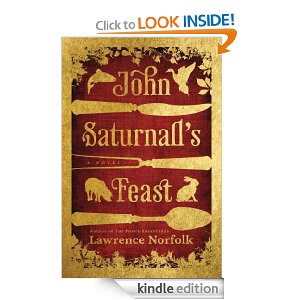
 This book is a rich feast-a historical novel about a boy’s coming of age; rising from starving orphan to one of the most accomplished cooks of his age. Set in the 17th century against the backdrop of Cromwell and the religious and political power struggle of the time, we are immersed in the kitchen of a small manor house and with the people and food of that time and place.
In the beginning John and his mother live in a small village where she is often consulted as a “wise” woman for medicinal plants and herbs and for her skills as a midwife but often held at arms length and viewed with fear. John begins to learn her skills by having her read to him from her large book that contains many receipts (recipes) and tells the story of the original people who came to this valley and the feasts that they kept. But their tenuous hold on life is suddenly taken away when religious fanatics overtake the small church and soon John’s mother is accused of being a witch and they are cast out of the village. John is eventually rescued by the old village priest and sent to the local manor and there in the kitchen he begins his new life and his education as a cook.
Using John’s recipes to introduce each section of the book, Norfolk allows us to trace the development of John’s skills as a cook and as the book follows the fate of the manor and its inhabitants through its’ threatened loss by a poorly worded will, the threat of religious fanaticism, war, and his enduring love for a girl beyond his station in life, we also see his development as a person.
Woven throughout John’s story is also the mythological story of Bucilla and Saturnus and the first people of that valley. There at the beginning of time a feast was held and the people shared their food and all were fed-a vision of a utopian ideal that helps John and the others who know the story get through the extreme hardships they face.
Norfolk paints a rich picture of this time and place; the pace of the kitchen, its noise and heat, the smells of spices and roasting meat, all of these come right off the page (or out of your ebook reader) and envelop you in the story. After having just read Consider the Fork by Bee Wilson, I had an even greater appreciation for the various implements that are described and the time and skill that were involved in cooking at that time.
Although some times slow paced, this rich and unique view of history from the point of a kitchen and its cook is one that immerses you in the smells, tools and routines of ordinary life in a different time and place.
Brenda’s Rating: ****(4 Stars out of 5)
Recommend this book to: Marian and Lauren
Book Study Worthy: Yes
Read in ebook format.
 Brenda's Bookshelf