
Iceland was fascinating. At first it looks barren and god-forsaken, but it grows on you! Soon you can see the little sprigs of growth, the green and yellow moss, the low lying bushes sheared by the wind, the small trees growing in the crook of a rocky out cropping. Your eyes search for beauty and they find it in the lava rock formations and in the shear gorges carved by water and glacier activity. It is cold but the geothermal pools provide warmth. Iceland is wild and beautiful.
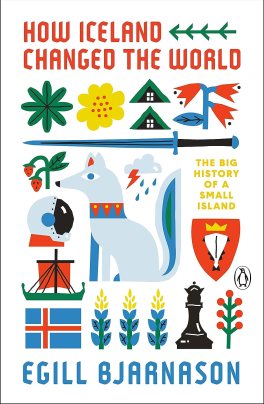 I read Bjarrnason’s book while visiting Iceland. It was certainly a helpful way to acclimate myself to the thinking and culture of this wild and beautiful place. His chatty yet informative style kept me interested until the very last page. There was so much to take in and so much history that I had not known that it was helpful to take breaks just to absorb what I had just read.
For example did you know that Iceland and its ambassador to the UN were instrumental in Israel becoming a nation? That was certainly a fascinating chapter as it described the series of events that placed Iceland’s ambassador in a place where he persuaded the UN to create the state of Israel after years of unproductive wrangling.
In 2010 Iceland’s volcanic activity shut down air travel for weeks as volcanic ash and detritus which can cause havoc on jet engines filled the air over the Northern hemisphere. Thousands were stranded, waiting for the volcanic activity to subside. However in June 1783 another eruption, Laki, caused far more consequential damage.
The results were so widespread, so disparate, and so extreme that it begs disbelief. In England, a dry sulfurous fog choked workers and led to tens of thousands of deaths. Calamitous summer thunderstorms dropped hailstones reported to “measure near five inches in circumference,” so large they killed cattle, according to the Newcastle Courant. Noxious dews and frosts damaged crops. Snow fell in Poland even though it was June. The effects spread: by July, the haze was noticed in China. Japan experienced widespread failure of the rice harvest and the most severe famine in the nation’s history. Inuit oral histories refer to “a summer that did not come.” Cool temperatures in Eurasia and Africa weakened the African and Indian monsoons, and without the rains, severe drought occurred in India and regions of China. Weak monsoons led to record low water levels in the Nile River; a low Nile meant famine. The next year, Egypt lost roughly one sixth of its population. As the months stretched on, the effects were even more keenly felt. Back in [the United States,] the winter average temperature on the US East Coast was 8.6 ° F below average. The Mississippi River froze at New Orleans, and ice floes were reported in the Gulf of Mexico. Record freezes of the Chesapeake Bay delayed congressmen who were coming to Annapolis to vote for the Treaty of Paris and end the American Revolutionary War.”
Six years later the French Revolution occurred. Although Laki’s eruption and its affects only lasted three years, some historians feel that the chaos of the Laki eruption may have accelerated the desperation of the peasants although many other political and economic factors contributed to the Revolution.
On October 24, 1975, an astounding 90% of female workers and housewives “took the day off” in Iceland. Led by a feminist movement that had grown ahead of the UN “International Year of the Woman, 1975, this disparate and non hierarchical structured movement called for all women to gather in the heart of Reykjavik to protest the structural inequality women faced. It was the beginning of a movement towards equality for women that led to Iceland’s first female President being elected in 1980, the first directly elected female head of state. (Although other women have led their countries as Prime Minister, they were elected as leaders of their parties first and then became heads of state when their parties won election and not through a direct election) Iceland has continued to lead the world in working towards gender equality, but it seems to me that we might be overdue for another “take the day off” in order to encourage all governments to do more and more quickly!
This book is not for just those of you who will visit Iceland, this is a fascinating discussion of the ways in which we are interconnected, and to discover the stories behind the history we have read in school. I encourage everyone to read this!
Brenda’s Rating: **** (4 Out of 5 Stars)
Recommend this Book to: Everyone!
Book Study Worthy? Yes!
Read in ebook format!
 Brenda's Bookshelf
Not my cup of tea, but I ordered it for Steve.
LikeLike