The Black Count: Glory Revolution Betrayal, and the Real Count of Monte Cristo by Tom Reiss

The Black CountSometimes fact is stranger than fiction and no where is that more thoroughly proven than in this book about the life of General Alex Dumas.

Dumas was born in the Caribbean to a mulatto slave woman and a aristocratic Frenchman, became a clever and brave soldier, a hero of the French Revolution, was incarcerated in a dungeon in Italy for two years, abandoned and betrayed by his fellow officers and on his return to France was rejected by the army, abandoned by his friends and lived in poverty until his death a few years later. His life story might have remained mostly an obscure reference in histories about the French Revolution but instead his son, Alexandre Dumas, used his father’s life and experiences as the basis for many of his finest literary works, thus immortalizing the father he worshipped but knew for only a short time.

Born in the highlands of Santo Domingo to a ne’er do well French aristocrat, Antoine Davy de la Pailleterie, (using the false identity of Antoine De l’Ile because he was in hiding from his younger brother,) and his mulatto mistress, Marie Celeste  in 1762, Thomas- Alexandre, did not have an auspicious beginning. His father was indolent and never seemed able to make a living and his mother’s status as mulatto slave carried its own heavy legacy. Thomas-Alexandre had three older siblings but they, along with his mother, were sold to another owner and Thomas-Alexandre himself, although known to be his father’s favorite, was sold  for 800 livres, with the right of redemption, to a ship captain to finance his father’s return to his family’s  French estate in 1775.

By then the Pailleterie estate had passed on to Antoine’s sister and her husband Maulde, since both of his younger brothers had passed away and Antoine, the oldest, had been in hiding. The estate had fallen into debt and ruin by the collapse of the sugar market and the younger brothers’ extravagant lifestyles, but since he took over, Maulde had been making significant progress in restoring the family fortunes, so it must have been quite a shock when the oldest son suddenly reappeared!  After negotiations between Maulde and Antoine, an agreement was reached and Antoine took over the estate and his position in French society as the Marquis and sent for his “pawned” son.  Listed as “the slave Alexandre” on the ship’s manifest, Alexandre arrived in Le Havre on August 30, 1776 to start his new life. By February of the following year, the Marquis had sold the lands of the estate to a neighboring landowner, secured an annuity from the chateau from a family member and moved to a suburb of Paris. With funding now secured, and having legally recognized his son, now known as Count Alexandre de la Pailleterie, they moved to the suburbs of Paris. And that is just the beginning of Alexandre’s extraordinary life!

Reiss’s does excellent research; from the legal intricacies of slave ownership and the status of the offspring of mixed parentage in France, to the complicated hierarchy of the French military, to the fluid political machinations during the French Revolution and later the French Republic, to the medical knowledge and understandings of illness at the time, Reiss is unstinting in his effort to give us the clearest picture we can of the life and times of Dumas and to bring him to life. Using Dumas’ own letters and the letters of others including Napoleon, whom Dumas greatly disliked Reiss is able to give insights into his character and thoughts about what was happening around him. Reiss’ writing is fluid and descriptive helping us place Dumas in context and in his surroundings whether at home, on a march in the Alps or Egypt or in his prison cell. It is no wonder that this book won the Pulitzer prize for biography in 2013!

His son, Alexandre Dumas, the famous French author would later rely on his father’s life, his ordeal in prison and his betrayal as the basis for his novel The Count of Monte Cristo, By writing that book, Dumas sought both catharsis and revenge against those he saw as the betrayers of his father and in the process proved once again that the pen is mightier than the sword!

 Brenda’s Rating: *****(5 Stars out of 5)

Recommend this book to: Sharon, Ken and Marian

Book Study Worthy: Yes!

Read in ebook format.


Posted in Biography, History, Non Fiction | Tagged , , | Leave a comment

Heretics and Heroes: How Renaissance Artists and Reformation Priests Created Our World by Thomas Cahill

Heretics and HeroesThomas Cahill plunges into the Renaissance and Reformation with the same curiosity and gift for making history come alive as in the previous books in his Hinges of History series.  This one is sixth in the series, coming after the Mysteries of the Middle Ages which I have reviewed previously.

Cahill explores the time period of 16th through the mid 17th centuries and follows individual lives who contributed to the underpinnings of our modern world.  For example, explorers like Columbus reached above their station in life  and were able to convince Kings (and Queens!) to fund their dreams of exploration, resulting in the discovery of “new worlds.”

Artists like Donatello, Leonardo da Vinci, Botticelli, Michelangelo, Caravaggio, Bernini Albrecht Durer and Bruegel changed the medieval perspective of art by giving the human form prominence in sculptures like the David or the Pieta, and in art like the the Mona Lisa, the Sistine Chapel or Praying Hands which celebrate humanity in all its glory and humbleness.

Erasmus,  Martin Luther, William Tyndale, Ignatius Loyola, and  John Calvin reframed the relationship between people and their God. No longer limited by the lack of access to books after the invention of the Guttenberg press, the knowledge and writings of these men helped reform the Church so that people could begin to think through their own salvation and understand their relationship to God and the Bible in new ways. The combination of the printing press and the release of King James Version of the Bible gave people who otherwise would not be able to read Greek or Latin access to it in their own language. The Ursulines a group of women dedicated to the education of women, made sure that all people, not just men, would be able to read and understand.

Queen Elizabeth I, as the Virgin Queen of England, ruled during a time of great turbulence and unrest, but proved that she was more than able to hold her kingdom together and created a rich and vital environment for the likes of Shakespeare to flourish in.

Cahill reminds us that each one of these people who offered new ideas and thoughts that led to the Renaissance and Reformation were influenced by and indebted to others who contributed to their new understandings. We all owe something to others and like the great poet, John Donne, said:

No man is a island, entire of itself; everyman is a piece of the continent, part of the main; if a clod be washed away by the sea, Europe is the less as well as if a promontory were, as well as if a manor of thy friend’s or of thine own were; any man’s death diminishes me, because I am involved in mankind, and therefor never send to know for whom the bell tolls; it tolls for thee.

Brenda” Rating: ****1/2 (4 1/2 Stars out of 5)

Recommend this book to: Marian, Lauren, Sharon, Keith and Ken

Book Study Worthy: Yes

Read in ebook format, but I think print form would probably be better in order to enjoy the illustrations!

Posted in History, Non Fiction, Series | Tagged , , , , | Leave a comment

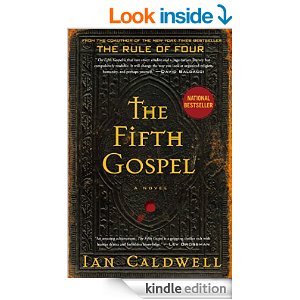
The Fifth Gospel by Ian Caldwell

The Fifth Gospel_Father Alex Andreou is an Eastern Catholic priest living inside Vatican City with his 5 year old son, Peter. He is a part of  small  but confounding tradition which follows the Greek Orthodox traditions which allows priests to marry but unlike the Greek Orthodox, follow the Pope.  He often feels like an outsider in the Vatican, but he has managed to find ways to make his life work and the Catholic monks that live in the apartment down the hall really enjoy caring for Peter whenever he works late or must attend to a sick parishioner. His brother Simon, however chose a different path and at the urging of their Uncle Lucio, a Cardinal in the Catholic Church, decided to take vows in the Catholic Church and has been working in the diplomatic corp of the Church in far flung outposts ever since. So it was with great delight that Alex and his son Peter got word that Simon would be in the city and they would be able to see him again after a long absence.

Then came the phone call from Simon. ” I need you to come get me,” he says followed by his location and then ends with these urgent and chilling words, “You need to get here before the police do.”  And with that brief warning Alex is suddenly immersed in trying to solve a mystery which tests his faith, exposes the tension between loyalty to family and to God and reveals the power of forgiveness to reclaim lives that are broken.

Caldwell is a good writer.

My son is too young to understand forgiveness…[A] boy can’t imagine how hard he will find it, someday, to forgive his own enemies. Or his own loved ones. He has no inkling that good men can sometimes find it impossible to forgive themselves. The darkest mistakes can be forgiven, but they can never be undone.

He has fleshed out his characters well and the plot moves quickly, although sometimes his need to describe the intricacies of Vatican history and legal procedure can overwhelm the narrative and make it plod a bit. It was much more thoughtful, realistic and better written than Dan Brown’s books which also explore Church history and conspiracies, for which I was grateful, since I find Brown’s books to be a waste of time.  So I am not sure exactly why I did not like this book more. There was an earnestness about it that was very appealing and I usually love books that deep dive into history and religion, so this should have been a great read, but somehow I felt held back from fully engaging with the characters and their plight. Sometimes though that is not so much an issue with the book or the writer but the mood you are in when you read the book. The final pages of the book however were touching, and did redeem it for me so I would encourage others to give it a try!

Brenda’s Rating: *** 1/2 (3 1/2 Stars out of 5) 

Recommend this book to: Sharon and Keith

Book Study Worthy: Yes

Read in ebook format.

Posted in Detective novel, Fiction, Legal Procedural, Mystery, Spiritual, Thriller | Leave a comment

Lionheart by Sharon Kay Pennman

Lionheart_It is always hard to tease out truth from fiction especially when your subject is someone whose exploits and life became the basis of legend. Richard the Lionheart, King of England  from 1189-99, was an amazing warrior, a sound tactician, an honorable enemy and a devout Christian who took up the cross on Crusade to save Jerusalem from the infidels. Richard was memorialized in songs, and tales, most notably in the tale of Robin Hood in which he played the small but essential role of absent king.  I would guess that most of us know him best as either the king who went on Crusade or the absent king whose kingdom descended into chaos and war under the mismanagement of his brother, John and the sheriff of Nottingham.

Richard’s life was always complicated. Born the third son in a family wrought with so much conflict and treachery it was known as the Devil’s brood, Richard never expected to become king. Instead, he took over his mother’s holdings and became the Duke of Aquitaine. But his father, Henry II, could not seem to settle the matter of succession in his own mind,  and in turn alienated each of his sons by manipulation, broken promises and managed to create a climate of such distrust that each son in turn, together and against each other took up arms against their father. In the end, the first two sons died in thier attempts to wrest control from their father and at Henry’s death, Richard became king.

Prior to becoming king, Richard had made a vow to go on Crusade after Jerusalem fell to Saladin, so after making sure that his kingdom was secure he quickly turned to preparing to fulfill this vow. He was careful to make sure that King Phillip of France would also join in this crusade since he did not want to leave his kingdom vulnerable to attack. This forced alliance, although tactically sound, would be a source of misery for the duration of the Crusade and his choice to honor his vows and go on crusade would have enormous consequences for England, since Richard, who although king for 10 years, would spend only a total of 6 months of his reign in England!

One historian has said of Richard,  “he was a bad son, a bad husband, and a bad king, but a gallant and splendid soldier.”  While, Muslim writers have said “Never have we had to face a bolder or more subtle opponent.” Although Pennman’s Richard is more nuanced, he is first and foremost a warrior and knight and in his effort to get that right, his roles as a husband, son, and king suffered significantly.  We see Richard”s inner conflict, his need to carefully tread between the political pitfalls of his day and the treachery that he faced among his own family, his nobles, his people and the other kings who went on Crusade with him.  His relationships with his mother, sister and wife are complicated and  illuminating. Penmans’ excellent research, her use of original materials like letters, journals and accounts written at the time add authenticity and insight into a time and culture whose values are very different from our own.

Penman, has been writing her way through the history of the Plantagenet family beginning with When Christ and His Saints Slept about Empress Maude and Gregory of Anjou, Time And Chance, about Henry II and Eleanor of Aquitaine, The Devil’s Brood about the dysfunctional family that Henry and Eleanor produced and Lionheart which focuses on Richard I who emerged from the Devil’s brood to become king. Lionheart takes us through to the end of the third Crusade and A Kings Ransom, recounts Richard’s fateful journey home.  Pennman’s well researched, historically accurate accounts of historical times and people are a joy to read!


Brenda’s Rating: ****(4 Stars out of 5)

Recommend this book to: Sharon and Marian

Book Study Worthy? yes

Read in ebook format.

Posted in Fiction, Historical Fiction, Series | Tagged , | Leave a comment

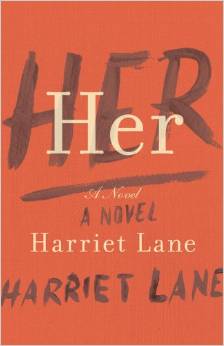
Her: A Novel by Harriet Lane

HerEmma is consumed by her life as a mother and wife. With one small child and another on the way she decided to stay at home, but her husband’s job is insecure and they can’t afford to do things they used to do before children. Emma has trouble believing that her life now revolves around cleaning up the debris after meals, the never ending cycle of laundry and picking up the toys that somehow scatter and multiply throughout the house. Then one day a stranger, with a kind gesture, insinuates herself into Emma’s life. Nina is everything Emma is not: confident, sophisticated, organized, calm and never shows up with baby cereal crusted hard on her sweater! Somehow it is this stark contrast that draws Emma to Nina.

Nina can’t believe that it is her, she sees on the street one summer morning. She is almost certain it is Emma and wonders, “Is your life the one that you were due?”  In the fall, when their paths cross again, Nina sees a chance and takes it, lifting Emma’s wallet from her bag while she is distracted with her child. With the information in the wallet she now knows where Emma lives and makes contact by acting like she found the wallet on the street and wants to return it.  After that, it was incredibly easy.

This is one of the most creepy psychological thrillers I have read in a long time!  Lane is incredibly gifted in fully realizing her characters. Both Emma and Nina seem like people you have known or could know. Emma, especially, is someone you identify with, especially if you have had children and know the feeling of having your identity completely subsumed by their endless needs and demands.  Nina, is also someone we can identify with: the perfectionist, the one who is always in control, who manages everything with seeming ease and maybe that is why this book has gotten such mixed reviews. We all know someone like Nina, but to slowly see her underlying pathology revealed feeds into our most basic fears and suspicions, and we react negatively towards the book as a protective response. The pacing of the book seems a bit slow at times but that just makes the suspense even more taunt as you get to the end.  And then the end…well I will say no more. Read it and let me know what you think!

Brenda’s Rating: **** (4 Stars out of 5)  

Reccomend this book to: Sharon. Marian and Lauren

Book Study Worthy: Yes   

Read in ebook format.

Posted in Fiction, Mystery, Psychological Mystery, Thriller | Tagged , , | Leave a comment

The Swimmer by Joakim Zander

The swimmer_Damascus, 1980. Holding his feverish baby, a man watches from the upper story window as his wife gets into his car, on her way to get something for the baby’s fever. He knows that he will have to leave soon, especially after what he has seen, but the baby’s fever has delayed him.  It is no longer safe and an escape route has already been prepared for him but it means he must abandon his child and his wife since they cannot come with him. He knows he is on borrowed time. He watches as she gets in the car and hears her turn the key. The car reluctantly turns over but does not start. He hears her try again and in that moment, he knows that it is already too late. The blast knocks him down and when he comes too he is lying on shards of glass, his body protecting the baby, his hands covering her ears.

Klara Waldeen grew up on a small island in an archipelago in the Baltic Sea. Raised by her grandparents she left their small community and now works for Eva-Karin Boman, a member of the European Parliament in Brussels. Like so many politicians Eva-Karin has no sense of boundaries regarding Klara’s time and has interrupted her weekend by demanding that she complete a summary regarding an IT security report by 5:00 Sunday evening. So much for any time off!  Hurriedly, leaving her grandparents and returning to Brussels, Klara rushes to finish her summary, completely ignoring an email from someone she thought she would never hear from again.

Mahmoud has finally gotten a glimpse of success.  It has been a long journey for him and his family. Beginning with his parent’s immigration from Lebanon to Sweden in 1980 and then his own the long academic climb, he was finally admitted into a Ph.D. program at the Faculty of Law at Uppsala University. He is just about to finish his book entitled, The Privatization of War, excerpts of which have been published in academic journals garnering notice and praise.  In fact he has been invited to speak at a symposium at the EU regarding the use of security firms and other private service providers in the conduct of war. It feels like his life is finally coming together, and maybe he might even be able to reach out to Klara to apologize for what he did to her. And then come the puzzling anonymous emails which end  with, “Determination, Courage and Endurance.”

Sweeping form Damascus, Brussels, Sweden and the United States from the early 1980s to the present day this fast paced thriller keeps you guessing until the very end. Writing like a John le Carré or Gerald Seymour, Zander evokes a time and a place through carefully chosen words and descriptions. His character development is good but sometimes the reader is inhibited from fully appreciating their development by his choice to tell this story by jumping back and forth between characters and time lines. All in all, however, Zander’s first book is a joy to read and I hope that we hear from him again!

Brenda’s Rating: ****(4 Stars out of 5)

Recommend this book to: Sharon, Marian and Ken.

Book Study Worthy? Not really.

Read in ebook format.


Posted in Fiction, Mystery, Spy/Covert Operatives, Thriller | Tagged , , | Leave a comment

The Book of Strange New Things by Michel Faber

As a daughter of missionaries I am always intrigued by how missionaries are portrayed in fiction. In general they don’t fair very well. The Poisonwood Bible by Barbara Kingsolver is probably the most recent example of the missionary stereotype in fiction; an obsessed, narcissistic, rigid, white male who has slowly become unhinged and has corrupted the Christian message into something that most Christians would not even recognize.  While I enjoyed Kingsolver’s excellent writing, I was troubled by the pervasive idea that missionaries were the only ones who could become unhinged in this way while aid workers or even business people were somehow exempt from this kind of destructive and culturally insensitive behaviour. Caputo does a better job in his excellent book, Acts of Faith, in portraying the pit falls of going to another country, with a surety that you have the answers that will solve all their problems, whether as a missionary, aid worker or business person. I   do not, dismiss the fact that there have been Christian missionaries who were abusive, or used the Christian message in less than loving ways and I even agree that Christians should be held to a higher standard because of who we are and what we profess to believe. But it does seem that this stereotypical portrayal often misses the good that missionaries have done world wide in promoting education and medical care, helping those who are ostracized or marginalized as part of being faithful and living out God’s love. Ultimately the sign of any good ambassador to another country, whether you are a missionary, an aid worker, a business person, or representing your own country, is humility and a willingness to learn what you do not know.

The Book of Strange new ThingsWhich brings us to Michel Faber’s The Book of Strange New Things which is about a missionary who has been asked by the inhabitants of a newly colonized planet to teach them the Bible or the “Book of Strange New Things,” as they call it.

Peter, a former drug addict without formal biblical training, is not your typical pastor, but he and his wife Bea have been working in an economically depressed area of England, and have built a small congregation there. So when USIC, the large corporation that oversees the colonization of the the planet Oasis, asks them to consider becoming missionaries, it is a bit of a surprise, but an intriguing one. Unfortunately, Bea is quickly dropped from consideration during the vetting process, but Peter continues to do well and ultimately ends up being chosen. Although they know that the long distances, separation and risk will have an enormous impact on their relationship, they decide that Peter should go to Oasis and he embarks on this adventure with trepidation and excitement.

After his arrival on Oasis and meeting his other fellow human colonists, Peter makes a trip to visit the inhabitants who have brought him to their planet to teach them the Bible. He is totally unprepared for his encounter with beings who look so alien and yet seem “human” in other ways. Initially their communication is done in rudimentary English and as he begins teaching them the Bible, Peter soon realizes that there are many references that the Oasans do not understand. How do you explain the beauty of the Twenty Third Psalm to someone who has never seen a sheep?  So Peter begins to adapt the Bible for the Oasans and together he and the other members of the congregation slowly begin building a church where they can meet.

Meanwhile back on Earth, things are not going so well.  Bea’s communications are filled fear and worry as food shortages caused by climate change, and strange cataclysmic events that cause global chaos and unrest begin to affect her. The shops where she buys food are closed and the hospital where she works cannot keep up with the influx of poor and needy people who come through its doors. Each message is filled with more and more hardship and although Peter tries to reassure and encourage her, his words sound trite and paternalistic and Bea becomes angry and estranged until finally she confesses that she has lost her faith and Peter realizes the limits of his own.

The Bible stored inside Peter was pure and unadulterated, not a word of it confused with anything else. And yet, for the first time, he was ashamed of it. The holy book he’d spent so much of his life preaching from had one cruel flaw: it was not very good at offering encouragement or hope to those who weren’t religious. With God, nothing shall be impossible, proclaimed Luke, and that message which Peter had always though was the most joyously positive reassurance you could wish for, now turned itself over like a dying insect, and became Without God everything shall be impossible.  

As Peter tries to reach out to Bea as well as to some of the human colonists who are struggling with emotional and spiritual issues, he receives wisdom and encouragement from an unexpected source which allows him to make some necessary but difficult decisions while coming to terms with his own faith.

Faber has done a great job in writing about a person of faith, with flaws and doubts, without falling into the typical stereotypes. Peter is imperfect, his faith is sometimes troubled, he is not certain whether he is communicating the Bible effectively to the inhabitants of Oasis, but he is there doing the best he can. The other characters are also well formed, even the aliens, who are touching in their “otherness.” Faber is extraordinary at describing the planet of Oasis immersing us in the weather, unique landscape, and the lives of its inhabitants and contrasting their lives with the lives of the colonists who try to remain “human” on an alien planet. Although ostensibly about aliens, space travel and space colonization, this genre bending book is really a meditation on faith and the power of love and forgiveness which can broach any divide and cross any distance.

Written by Faber after his wife Eva was diagnosed with an incurable cancer and finished at her bedside in the hospital, Faber has said that this is his last book, which is a huge loss to us all.  However, knowing this context makes the final sentence of this book even more powerful and poignant.

Brenda”s Rating: ***** (5 Stars out of 5)

Recommend this book to: Keith, Ken, Sharon, Marian and Lauren

Book Study Worthy? Yes!

Read in ebook format.          

Posted in Fiction, Literary Fiction, Science Fiction, Spiritual | Tagged , , , , | Leave a comment

What Angels Fear by C.S. Harris

What _Sebastian Alistair St. Cyr, Viscount Devlin, a title he received when his elder brothers died much to the chagrin and disappointment of his father, the Fifth Earl of Hendon, was having a very troublesome day. In the very early hours of the morning he had fought a duel. It had been a close call since the other man had tried to shoot him before they had even completed their paces, and St. Cyr, although well within his rights to kill him outright, had instead merely wounded him in the backside, leaving him unable to sit for quite some time. Returning home later that morning he was greeted by his father, who as the current Chancellor of the Exchequer, was furious with St. Cyr for dueling since it would reflect badly on the family’s reputation and for his careless disregard for his own life, since as the last remaining heir it was imperative that he preserve the family line.

His second visitors that day were Sir Henry Lovejoy the chief magistrate for Westminster and two constables who arrived with a warrant for his arrest for the murder of Rachel York, an actress and thus a woman of questionable morals who had been found murdered, her head almost decapitated, on the steps to the altar of St Matthew of the Fields church. St . Cyr’s pistol was found next to the body, and Lovejoy said that if he did not have a good alibi they would have to take him into custody.

After initially thinking that he should let justice take its course St. Cyr changes his mind when confronted with one of the constables who seems particularly bent on framing him and escapes from their custody, disappearing into the warrens of St. Giles. There in hiding he decides that the only way to prove his innocence is to do it himself. Following the evidence with skills he learned while serving in the intelligence service during the Napoleonic Wars, St. Cyr  gradually uncovers the twisted trail and reveals the person who killed Rachel York and tried to frame him for her murder.

Harris knows how to create great characters, and evoke the time period and customs of the pre-Regency era with great deft and care. St. Cyr is arrogant, as someone in his position would tend to be, but he also is able to relate to common people, and is vulnerable and caring. The other characters each in their own right are interesting and fully fleshed out, even Rachel, who was murdered, is shown as a complicated and multi-dimensional person.  Tom, the urchin boy that St. Cyr rescues, is particularly delightful and interesting.

This was my first introduction to Harris and this series, but I know that it will not be my last. I have already downloaded the next book!

Brenda’s Rating: ****(4 out of 5 Stars)

Recommend this book to: Sharon, Marian and Lauren

Book Study Worthy? No

Read in ebook format.


Posted in Detective novel, Fiction, Historical Fiction, Legal Procedural, Mystery, Series | Tagged , , | Leave a comment

Malice by Keigo Higashino, Translated by Alexander O. Smith

Malice_Higashino, who wrote the Devotion of Suspect X  is back again with a new mystery, Malice. Although written in 1996, it was not translated until 2014 when it became an Edgar Award Finalist. It is wonderful that Higashino is getting the recognition he deserves, for he is truly a master at the psychological mystery by surprising and keeping you guessing until the very end, just like the great mystery authors Agatha Christie or Ellery Queen,

The story begins with the death of a famous author Kunihiko Hidaka on the eve of he and his wife, Rie’s departure to Canada. The body, lying in his home among the packing boxes, is discovered by his long time friend and fellow author Osamu Nonoguchi. Detective Kaga is called in to investigate the suspicious death and the story proceeds in nine different sections told from the perspectives of Detective Kaga and Osamu Nonoguchi.  Rather than a “whodunnit” this is really a “whydunnit” since a confession to the murder emerges fairly early in the book, but Detective Kaga is unsatisfied and continues his investigation trying to figure out why the crime was committed which leads him to a new understanding of who murdered Hidaka.

Higashino is artful in his plotting and pacing and like an intricate piece of origami, at each point when you finally think you have the answer, something new emerges throwing everything you already knew in an entirely new light.  Higashino develops his characters so that we understand their motivations and their complicated relationships with each other. Smith does an excellent job in his translation with smooth dialogue and narration, which in less skilled hands can often feel choppy or pedantic.

This was a fun, intriguing and culturally insightful read. For those who love mysteries, I hope that you will give Higashino a try; you will not be disappointed!

Brenda’s Rating ****( 4 out of 5)

Recommend this book to: Sharon, Marian and Keith

Book Study Worthy? yes

Read in ebook format


Posted in Detective novel, Fiction, Mystery, Psychological Mystery | Tagged , , | Leave a comment

The Bone Clocks by David Mitchell

David Mitchell is a fascinating writer. Everytime he publishes a book it creates a big splash, and that is not just hype or good marketing. His books live up to all their acclaim by defying genres, containing well developed, compelling characters, well thought out and surprising plot lines even while maintaining a beautiful and cohesive writing style.  In The Bone Clocks_The Bone Clocks, Mitchell again spins a tale worthy of Sheradnazee, that is both highly entertaining and deeply thought provoking.

As a little girl, Holly Sykes, heard voices.  She called them the “Radio People” and they often let her know when something was going to happen. For awhile Holly and the voices got along and were comforting, but then they became more and more intrusive and unable to control them, Holly broke down and told her mother about them. Understandably, her mother thought that there might be something terribly wrong. but Dr. Marinus, a child psychologist from London was able to help with a simple acupuncture technique and the voices went away.

Now in 1984, Holly is fifteen, and she is madly in love. After a huge row with her mother she decides to leave home and go live with her boyfriend. But when Holly arrives at her boyfriend’s flat, she finds him in bed with her best friend!  Unwilling to go back home and face her mom’s “I told you so ” looks, Holly leaves town and heads towards a farm where she can live, work and and get over her heartbreak and betrayal.  “Love’s pure free joy when it works,” she says to herself, “but when it goes bad you pay loan-shark prices.” Along the way she has some strange and frightening encounters, and when she tries to remember there are pieces missing from her memory, which inexplicably do not seem to worry or concern her and she soon settles in at the farm and does the work she is given. Eventually her family is able to track her down and to her horror she finds out that her younger brother, Jacko, went missing the same day she left home and has never been found. Holly returns to her devastated family and realizes that she is last person to see her brother before he disappeared and that his last request that she memorize a labyrinth pattern he designed was the last thing that he ever said to her.

Holly’s story continues to weave in and out of this book, but Mitchell introduces us to other characters like Hugo Lamb, on scholarship at Cambridge in 1991, who wants to be important and successful, or Edmund Brubeck, the reporter who is addicted to his life of danger and adventure reporting on the war in Iraq in 2004 and can’t seem to stay home with his wife and daughter, or Crispin Hershey, a has been author in 2015, whose newest work was shredded to bits in a review by his supposed friend and fellow writer. Like a kaleidoscope each of these characters, in turn, tells their story while offering us another perspective on the significance of Holly’s lost memories, the mysterious disappearance of her brother, and the strange cabal that seems to be following Holly at every turn.

Mitchell’s questions about time, the nature of love, and our inter-relationships with each other and with the planet are provocative and thoughtful.  “S’pose,” Holly says heaven’s not like a painting that’s just hanging there forever, but more like…like the best song that anyone ever wrote, but a song you only catch in snatches, while you’re alive, from passing cars or..upstairs window when you’re lost…” Reading this book was certainly a glimpse of heaven, one that I hope others will find as well!

Brenda’s Rating: *****(5 Stars out of 5)

Recommend this book to: Keith, Ken, Lauren, Marian and Sharon

Book Study Worthy? Yes

Read in ebook format

Posted in Fantasy, Fiction, Literary Fiction, Mystery, Thriller | 1 Comment