
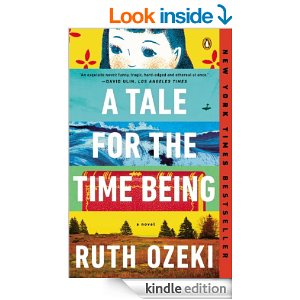
 On a remote island in Canada, Ruth, a novelist who has been struggling with ennui and writer’s block, comes across a small package in the surf on the beach near her home. When she unwraps the package she finds a Hello Kitty lunchbox containing a diary written by a 16 year old girl in Japan, some letters written in Japanese, and some other mementos. Wondering if this package could be detritus from the Japanese Tsunami, Ruth, who herself is Japanese takes these gifts from the sea as a sign, and begins to read the diary, hoping that they might help her come to terms with her own life.
Nao, the young writer of the diary, announces in the first pages of her diary that she plans on killing herself, but has set herself the task of writing a biography of her great grandmother, a famous Buddhist nun, before she can carry out her plan. Initially, Nao wrties about what has brought her to this decision, but as she begins to chronicle the events of her great grandmother’s life both before and after becoming a nun, she begins to find out more about her own family; the uncle who was a kamikaze pilot in WWII and her own father who after failing in a job in the US during the dot.com bubble, returns to Japan as a shadow of himself.
Ruth, is soon caught up in the diary and as she realizes Nao’s strong commitment to kill herself, she wants to reach out and somehow stop what surely has already happened. Ruth’s begins to do some research using clues she finds in the diary, but this leads her nowhere, and she is trapped both by time and lack of information and is unable to influence or change what is unfolding before her in the diary in the present but has already occurred in the past..
Ozeki is a gifted writer. She captures the cadence and attitude of both the 16 year old Nao and the gentle, obfuscating speech of her 100 year old grandmother as well as depicting Ruth, a middle aged novelist who has seemingly lost her voice. Ozeki writes with deep insight and a thorough knowledge of Japan and its culture, especially with regard to Nao’s re-integration into Japanese society after living in the US. The subject matter of this book is quite challenging however, with themes of suicide, depression, extreme bullying, and the kamikaze pilots of WWII. Although, Ozeki handles these themes with dexterity and grace, I sometimes felt overwhelmed by a cumulative sadness for these characters and their tremendous struggles and at other times I was furious at the defeatist attitude of Nao’s parents, particularly, her father. In the end however, Ozeki manages to bring this story to a satisfying, although somewhat contrived conclusion, and we are reminded again of our shared humanity, and the way we influence people without even knowing it
Brenda’s Rating: ****(4 Stars out of 5)
Recommend this book to: Sharon. Lauren, Marian, Keith and Ken
Book Study Worthy? Yes
Read in ebook format.

