
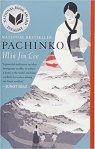
 A finalist for the National Book Award, Pachinko by Min Jin Lee is a haunting and moving four generational saga of a Korean family who flees what is now North Korea to live in Japan. Spanning more than eighty years from 1910-1989, it describes the hardships and struggles in Korea, the move to Japan where they face war time shortages, discrimination and always the malign presence of a man with strong ties to the mafia. Yet, despite these challenges the family survives and eventually thrives as they make a place for themselves in the only place they have to call home.
Sunja, was raised in a small village in Korea by parents who although poor and disadvantaged, because her father is crippled, love her and want what is best for her. As she becomes close to marriageable age, her parents begin looking for a suitable bridegroom, but Sunja in a rare moment of rebellion meets and begins a surreptitious relationhip with a wealthy man she meets in the city nearby. Dazzled by his wealth and his interest in her, Sunja disregards the warning signs, until she discovers she is pregnant and that he is already married and has no intention of leaving his wife. With her innocence shattered, Sunja decides instead to marry a Korean minister who has been recovering from a long illness in her home. He is a good man, although not strong physically and the biggest advantage is that he is leaving Korea to minister to a small Korean church in Japan.
Once they arrive in Japan, Sunja realizes that her husband, although kind and devout, has no head for money and little understanding of what it takes to provide for his family. Without knowing the language, and facing terrible living conditions, Sunja must begin again, learning to nurture and provide for her family while keeping them safe from the influence of the man who dishonored her.
Lee is a phenomenal writer who portrays the individuals and the struggles of this family with a perceptivity that is both gentle and honest. Her characters are both flawed and good, exhibiting a wide range of emotions and reactions to the sometimes desparate and heartbreaking situations in which they find themselves. I was especially impressed with the way she describes the vast and entrenched discrimination that Koreans faced (and still face) in Japan, and the ways in which the limited the choices offered to Koreans in Japan created an incentive for a criminal underclass to flourish.
In the US we value our immigrant past and we have the opportunity to read many of those stories and even tell our family’s immigrant stories to our children, but it is not often that we get to hear an immigrant story from another country and culture. In this case, Lee offers us both a mirror and a lens to understand a different kind of immigrant story leading us to a deeper appreciation for the challenges immigrants have faced all over the world and still do today.
Brenda’s Rating: *****( 5 Out of 5 Stars)
Recommend this book to: Sharon, Marian, Lauren, Keith and Ken
Book Study Worthy? YES!
Read in ebook format.
 Brenda's Bookshelf
Thanks for this review, Brenda! I certainly want to read this, and probably will choose it for my Pickles Book Club next year. We had a heart for the Koreans in Japan and what they had endured. Once when they were protesting having to be finger printed, we refused to be finger printed in solidarity with them. Our Angie at the library said she reads your reviews, so I hope she will order this book. Love, june
LikeLike