
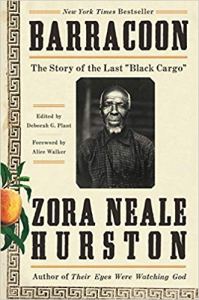
 When Zora Neale Hurston came to Plateau, Alabama in 1927, Cudjo Lewis was eighty six years old. He was one of the last living slaves who remembered crossing the Middle Passage from Africa to the United States on the last slave ship, the Clotilda, in 1860. Hurston, an anthropologist, ethnographer and folklorist who was researching slavery and the slave trade, had been in Alabama previously doing research when she found heard about Cudjo and decided to come back to interview him for her project. Over the course of three months, Zora would make her way to Cudjo’s small house that he had built himself and while eating peaches and watermelon, they would talk about his life in Africa, the day he was captured by a neighboring tribe, being kept in a barricade or barracoon until the slavers came in their ships and loaded him and others from his tribe into the holds. He was nineteen when he was forced onto that ship and for five and half years he was a slave on one of the plantations in Alabama, until one day Union soldiers told him he was a free man.
Written in the vernacular that Cudjo spoke, this narrative is both a personal testament to the resiliency of the human soul, and a scathing indictment of slavery. Cudjo is forever scarred by the betrayal of his own people who sold him into slavery for monetary gain and even though he lived longer in the US than in Africa he still longs to return to his village, wondering if anyone would remember him. He tells of his life as a slave, learning to please his erratic master, and being ostracized and berated by the other slaves for being “ignorant” and “savage” because he didn’t know their language and the culture. Cudjo continuously hovers between three cultures, never actually being able to claim either his African heritage from which he was forcibly removed, or the black culture from which he is ostracized for being “other,” or the wider white culture which was never open to him even as a free man.
When Hurston completed the book in 1931, she took it to various publishers but was never able to get it published. It was the middle of the Depression and publishers were leery of something so ethnic. There was also deep concern that the vernacular in which the story was told might be seen as racist and demeaning and so Hurston, shelved the manuscript and went on to write more than 50 short stories, plays and essays and four novels, the most well known being Their Eyes Were Watching God. Barracoon has recently been revised and edited for modern readers by Deborah G. Plant, but Hurston’s scholarship and care in telling Cudjo’s story as well as her own meticulous research confirming various key aspects of his story shines through and we see this amazing man, who tells his story with such dignity and honesty that we cannot help but be touched and changed by it.
Brenda’s Rating: *****(5 Out of 5 Stars)
Recommend this book to: Ken, Keith, Sharon, Marian and Lauren
Book Study Worthy? YES!!
Read in ebook format.


Thanks, Brenda, for sharing about what seems to be an intrerestng and important book for this year marking the 400th anniversary of slavery
in what is now the U.S.
LikeLike