The Transcendent Kingdom by Yaa Gyasi (Books to Read During a Pandemic, Part 48)

Are science and faith incompatible? That is the underlying question in Gyasi’s novel The Transcendent Kingdom, but she explores it as if using a kaleidoscope, twisting the picture so that new images and understandings emerge and we can see things from a new perspective. Although this is a simple story, there is complexity and deep insight to Gyasi’s exploration of this important question.
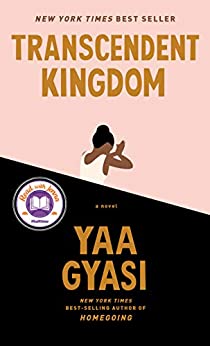
Giffy is a PhD candidate in neuroscience at Stanford University’s School of Medicine. Her research is on reward-seeking behavior in mice and the neural circuits of depression and addiction. Her choice of this research topic is not random. Her brother a high school basketball star, became addicted to OxyContin after an ankle injury and ended up dying from an overdose of heroin.

Giffy’s mother, an immigrant from Ghanna, became suicidal after the loss of her son, and for a few months Giffy was sent back to Ghanna to live with her aunt while her mother recovered. When Giffy came back, her mother was mostly functional, but something deep within her had changed and she often took to her bed, unable to move or even speak.

Giffy’s desire to figure out the science behind addiction and depression come from a deep desire to understand what happened to the people she loves and how to help them. Now in her sixth year of her program she is almost ready to write her final paper and complete her PhD program, but she is procrastinating, uncertain whether the scientific results that she has discovered are enough to answer the question she posed. Then she gets a call from the pastor in her hometown in Alabama. Her mother is not doing well, and Giffy invites her mother to come and stay with her. 

With the arrival of her mother, Giffy is flooded with memories of her upbringing in Alabama, the role of her evangelical pentecostal church in their lives and the ways that the church both helped and failed her family during difficult times. As Giffy begins writing the paper summarizing the results of her experiments, she realizes that she still longs for the certainty and comfort of her childhood faith. As Giffy struggles to reach out to her mother and write her paper, she tries to work out for herself where faith and science can intersect.  

Both tender and emotionally searing, this book does not spare the reader from the horrific effects of addiction or the devastation of severe depression on family members.  Yet it is in that honesty that we see the power of Giffy’s determination and faith. Gaysi is a gifted writer, her characters are memorable and touching and she has something deeply meaningful to say.

  Brenda’s Rating: ***** (5 Out of 5 Stars)

Recommend this book to: Marian, Lauren Sharon, Keith and Ken

Book Study Worthy? Yes

Read in ebook format.
 

Posted in An Antiracist Education, Books to Read During a Pandemic, Fiction, Literary Fiction, Spiritual | Tagged , , , | 1 Comment

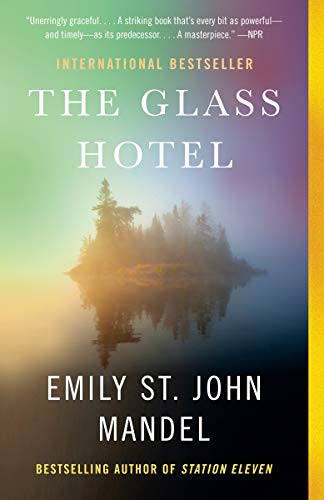
The Glass Hotel by Emily St. John Mandel (Books to Read During a Pandemic, Part 47)

One night, at an exclusive and remote hotel on the tip of Vancouver Island, someone etched with acid the following words on the large picture window in the bar: “Why don’t you swallow broken glass.”  Who was the message for and what did it mean? No one at the hotel that night, was completely sure, but the repercussions of those words are far reaching and immeasurable.

For Vincent, the bartender at the hotel, it means a sudden change in her life circumstances, as the owner of the hotel, Jonathan Alkaitis, invites her to New York to live with him.

For Leon Prevant, a shipping mogul on vacation with his wife, it becomes an opportunity for him to meet Alkaitis, learn about his hedge fund and becoming an investor.

For Paul, the night houseman who is also a half brother to Vincent, it becomes the reason he must leave, as the hotel manager suspects him of having something to do with the incident.

For Ella Kaspersky it was a warning shot across the bow, but did the person the message was intended for ever receive it?   

Emily St. John Mandel is a gifted story teller. She also has a away of creating mystery, and suspense by the weaving the past and the present which leads us into the future.  Her characters are insightfully and creatively drawn and yet with some opacity, as if they are allowing you to see them thus far and no farther. Instead of being a barrier, this opacity, seems to draw the reader in deeper into the story, yearning to learn more. Like Station Eleven, which I truly enjoyed, Mandel has created a rich world full of  interesting characters who must face the consequences of their choices.

Brenda’s Rating: ***** (5 out of 5 Stars)

Recommend this book to: Sharon, Marian, Keith and Ken

Book Study Worthy? Yes

Read in ebook format from the library.

Posted in Books to Read During a Pandemic, Fiction, Literary Fiction, Mystery, Suspense | Tagged , , , | 1 Comment

Snow by John Banville (Books to Read During a Pandemic, Part 46)

You can’t get more appropriate than reading a book called “Snow” during a winter snow storm! Banville is a new author to me, but I know I will be reading more of his work. 

It is a snowy winter day, 1957, and Detective Inspector St.John Strafford, from the Dublin police, has been called to Ballyglass House, the family seat of the secretive aristocratic Osborne family. The parish priest has been found murdered in the library.

The priest had been visiting the Osborne’s, as he often did,  and had been persuaded to stay the night because of the snow. It seemed that at some point in the night he had left his room and had fallen down the stairs and then in a particularly gruesome act, someone had removed his reproductive organs while he laying dying.  

Strafford, and his deputy, Jenkins are under enormous pressure, not only from the Chief of Police in Dublin, but from the Archbishop of Dublin, who wants to control the result of the investigation so that the Catholic Church’s reputation is protected. Under these difficult circumstances, Strafford and Jenkins begin their investigation and find that the Osbornes are not the wealthy aristocrats they try so hard to appear to be.  There are questionable finances and mental health issues, prescriptions for drugs and two children who seem to have little or no respect for authority. Additionally, there is a brother in law who is constantly in need of funds, and various servants who may have had a grudge against the priest. With the snow coming down quickly, and threatening to cover up whatever evidence the killer might have left, Strafford tries to focus his attention on solving the murder in spite of the political pressure that is being exerted. But when his deputy goes missing, he realizes that the killer may need to kill again in order to get away with murder.

With some faint bows to Agatha Christie, like the body in the library trope, Banville teases us into thinking this an ordinary whodunit, but he soon exerts the full weight of his talent and creates a story of betrayal and revenge, driven by characters who are in search of justice in a time where justice was often sacrificed on the altar of preserving power and reputation. Banville, a previous winner of The Man Booker Prize and other prestigious awards, is an author I look forward to reading more of in the future!

Brenda’s Rating: ****(4 Out Of 5 Stars)

Recommend this book to: Keith, Sharon and Marian

Book Study Worthy? Yes

Read in ebook format 

Posted in Books to Read During a Pandemic, Detective novel, Fiction, Historical Fiction, Mystery, Suspense | Tagged , , | 1 Comment

Anxious People by Fredrik Backman (Books to Read During a Pandemic, part 45)

Fredrik Backman has been on my radar ever since I read A Man Called Ove. He has a unique perspective and a wry way of delivering his insights on the human condition. In Anxious People, Backman has taken a bank robbery gone wrong, a hostage taking of some of the most eccentric and unlikely group of hostages, and a father/son police duo who bungle their way through the investigation of a crime that may or may not have happened. As you can see, there is much to work with, and Backman in his inimitable style takes a deep dive into what makes us human and how even strangers can rise to the occasion and help each other.

From the first page Backman draws us in, by explaining with great insight the existential dilemmas that we encounter by being human:

This story is about a lot of things, but mostly about idiots. So it needs saying from the outset that it’s always very easy to declare that other people are idiots, but only if you forget how idiotically difficult being human is. Especially if you have other people you’re trying to be a reasonably good human being for. Because there’s such an unbelievable amount that we’re all supposed to be able to cope with these days. You’re supposed to have a job, and somewhere to live, and a family, and you’re supposed to pay taxes and have clean underwear and remember the password to your damn Wi-Fi. Some of us never manage to get the chaos under control, so our lives simply carry on, the world spinning through space at two million miles an hour while we bounce about on its surface like so many lost socks. …We don’t have a plan, we just do our best to get through the day, because there’ll be another one coming along tomorrow. Sometimes it hurts, it really hurts, for no other reason than the fact that our skin doesn’t feel like it’s ours. Sometimes we panic, because the bills need paying and we have to be grown-up and we don’t know how, because it’s so horribly, desperately easy to fail at being grown-up. Because everyone loves someone, and anyone who loves someone has had those desperate nights where we lie awake trying to figure out how we can afford to carry on being human beings. Sometimes that makes us do things that seem ridiculous in hindsight, but which felt like the only way out at the time. One single really bad idea. That’s all it takes.”

And indeed, for the failed bank robber and unlucky hostage taker, it was just one bad idea that brought a disparate group of people together in an apartment that day. But it was because of that unexpected meeting that something truly good happened as well. 

Backman’s trademark is finding a spark of human kindness in the most unlikely of people. He writes with such compassion and honesty that it allows us to see with new eyes those around us and even ourselves.

Brenda’s Rating:  *****(5 Out of 5 Stars)

Recommend this book to: Sharon, Ken, Keith, Marian and Lauren

Book Study worthy? YES!

Read in ebook format.


Posted in Books to Read During a Pandemic, Detective novel, Fiction, Literary Fiction, Mystery, Romance | 2 Comments

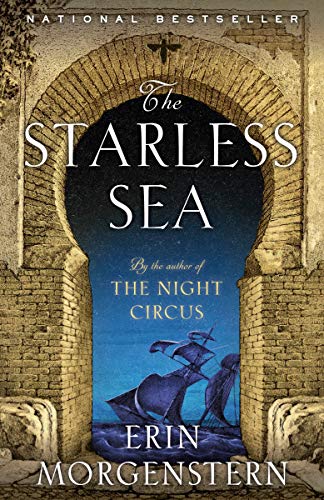
The Starless Sea by Erin Morgenstern, Books to Read During Pandemic, Part 44)

The blurb for this book says it is a “…a timeless love story set in a secret underground world—a place of pirates, painters, lovers, liars, and ships that sail upon a starless sea.” I think that description encapsulates much of the mystery of this book, which is not quite fantasy, although it is quite fantastical, and not quite a mystery, since many of our questions about the Starless Sea are never addressed or answered, nor is it quite a love story, at least not in a traditional sense. What it is, however, is a very intriguing book about a quest of self discovery.

Zachary Ezra Rawlings, is a graduate student in Vermont. During the course of his research he discovers a strange and compelling book in the stacks. The book seems to be a collection of stories about another world where prisoners tell stories to earn their release and lovers who must send messages to each other slipping them under locked doors because they are in different times and different places. But then he comes across a story that is taken from his own life and suddenly Zachary is desperate to learn all he can about the book and where it came from. 

Zacahry’s investigations lead him to a charitable foundation located in New York City which is coincidentally having a masquerade party as a fund raiser and he decides to attend. Although the party seems to be a normal fund raising event, Zachary is soon led to a back room and then through a doorway into another world. Here is a world where books and stories are kept and with much sacrifice are guarded. He soon learns, however, that there is a war going on between those who want to preserve this world and those who want to shut it off and lock it away. Caught in the middle of a war that he does not understand Zacahry, tries to pursue his own story, to find how a childhood memory ended up in the book he found and led him to this strange underground world.

Fascinating, and disquieting, this book makes you wonder whether it is purely a book of fantasy or a deep dive into the disordered mind of someone who is suffering from mental illness. There are times when overlap between the two becomes quite discordant and yet Morgenstern manages to keep the story on track just enough so that the fantasy prevails. As Zachary discovers who he is and faces into a past he never knew, the story moves to more solid ground and we begn to see the wholeness in the disparate things that have been revealed. Complicated and discordant, I often found myself questioning the author’s choices and wondering what point she was trying to make. Once I was able to let go of my critic, however, I was able to just allow the stories to float in and through me, which I think may have been the authors main intent–to create a world where we can just be and let the stories take us where they will on a starless sea.

Brenda’s Rating: ***1/2 (3/1/2 out of 5 Stars)

Recommend this book to: Lauren and Marian

Book Study Worthy? Yes

Read in ebook format.


Posted in Adventure, Books to Read During a Pandemic, Fantasy, Fiction, Mystery, Romance, Uncategorized | Tagged , | Leave a comment

The Piano Tuner by Daniel Mason (Books to Read During a Pandemic, Part 43)

Daniel Mason, is fast becoming one of my favorite authors. The Piano Tuner was published before The Winter Soldier which I really enjoyed and reviewed previously, and I found it just as engrossing and even more lyrical and mysterious.

In 1886 Edgar Drake, a piano tuner, is approached by the British War Office to undertake a dangerous mission to the jungles of Burma to tune the piano of a eccentric military doctor who has proven indispensable to British interests in Southeast Asia.

Jolted out of his ordinary, middle aged, existence, by this invitation, Edgar, with the blessing of his wife, begins to make plans to go to Burma. Shy, but extremely observant, Edgar begins the long journey to a world that is strange, beautiful and cruel. Although not well versed in history or geopolitics, Edgar finds that his understanding of music provides him with unique insights and an appreciation of different cultures as he travels across continents, oceans and rivers on his way to the piano that he must repair.

Mason, who actually lived in Thailand for awhile, learned much about this area and its history. The clash between France and Britain over who would get what territory, the slow disintegration of the native governments and tribes under this onslaught becomes the backdrop against which Edgar, must travel and work. Mason deftly draws us in, as we meet the mysterious doctor who is a hero to some and to others a villain and yet seems to wield so much influence and power. At first Edgar only sees the seductive beauty of the jungle and the doctor’s altruism, but he soon realizes that there is more to the jungle than its flowers and that the doctor’s motivations are far more complicated. As he begins to unravel the mysteries that surround him, Edgar must also come to terms with the deep longings that are being revealed within himself.

Mason’s lyrical writing captures the beauty and mystery of Burma and it’s people. His characters are complicated and sympathetically portrayed and you feel drawn to them. This was a book I settled into to read and then found myself hours later, surprised to find that I was not on a river in Burma but in my bedroom at home.

Brenda’s Rating: ***** ( 5 out of 5 Stars)

Recommend this book to: Marian, Lauren, Keith, Sharon and Ken.

Book Study Worthy? Yes!

Read in ebook format.

Posted in Books to Read During a Pandemic, Fiction, Historical Fiction, Literary Fiction, Mystery, Uncategorized | Tagged , , , , | Leave a comment

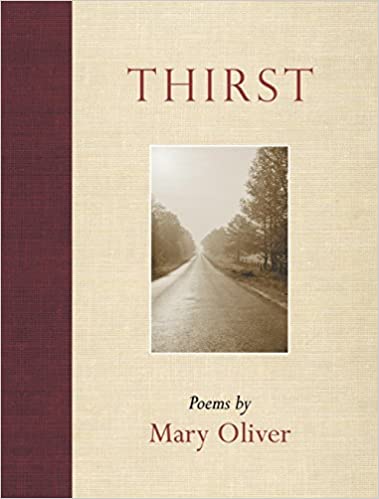
Thirst by Mary Oliver (Books to Read During a Pandemic, Part 42)

What better way to start the New Year then to settle in and read some poems by Mary Oliver! I have begun to appreciate her poetry more deeply as the years go by. She is a chronicler of the human condition, and an acute observer of our relationships with the living creation that surrounds us. Listen to this poem called Messenger from her book Thirst and you will see what I mean:

Messenger

My work here is loving the world.

Here the sunflowers, there the hummingbird–

equal seekers of sweetness.

Here the quickening yeast; there the blue plums.

Here the clam deep in the speckled sand.

Are my boots old? Is my coat torn?

Am I no longer young, and still not half perfect? Let me

keep my mind on what matters,

which is my work.

which is mostly standing still and learning to be

astonished.

The phoebe, the delphinium.

The sheep in the pasture, and the pasture.

Which is mostly rejoicing, since the all the ingredients are here.

which is gratitude, to be given a mind and a heart

and these body-clothes,

a mouth with which to give shouts of joy

to the moth and the wren, to the sleepy dug-up clam,

telling them all, over and over, how it is

that we live forever.

Messenger, Mary Oliver, Thirst, p1.

In this New Year may we all find that our work is to love our world!

May it be so!

Posted in Books to Read During a Pandemic, Poetry, Spiritual | 1 Comment

Best Books of 2020- A Year End Wrap Up (Books to Read During a Pandemic, Part 41)

At the beginning of this new year, I want to take some time to review what I consider to be the best books I read during 2020.

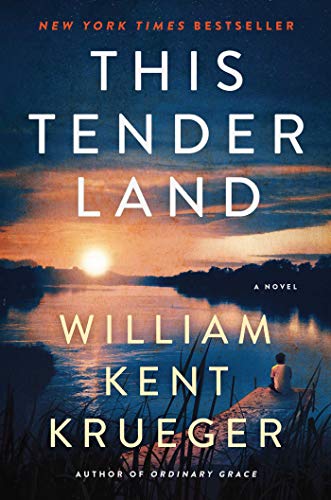
Early in the year I read, This Tender Land by Krueger, which is a novel about the lives of three boys and a girl who escaped from a “school for civilizing” native children during the Great Depression. Using a canoe on the Mississippi River as their means escape, these children have many adventures, giving the reader a glimpse of what life was like during that time of tremendous economic and cultural upheaval.

Krueger’s unique ability to be both clear eyed and sympathetic (not maudlin or polemic) makes this book compelling. Most of the characters in this book are broken in some way, either with grief, mental illness, alcoholism or just by the sheer bad luck of their circumstances and yet Krueger is able to make their full humanity shine through, allowing the reader to see both nobility and pathos in each one. Truly a gifted author, Krueger’s unspoken questions on what makes us human, what do we owe each other and how do we find a place to belong, resonate throughout the book making us ask ourselves those very same questions.

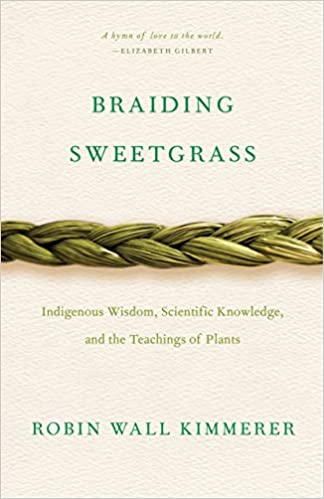
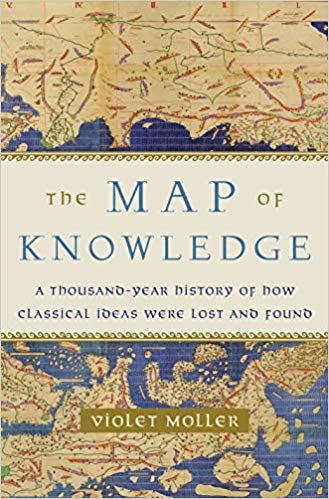
Two non-fiction books that really stood out for me this year are Braiding Sweet Grass by Robin Wall Kimmerer and A Map of Knowledge by Violet Moller

Braiding Sweet Grass opened a way of understanding nature and the relationship between plants and creatures and humanity that was both profound and revelatory.  Kimmerer’s writing is lyrical and poignant. She tells stories of her family, of the students she has taught, of the wise counsel she has received from Native Elders and the unexpected insights she has learned in her research and in her own backyard. As someone said, this book is “a hymn of love to the world” and Kimmerer extends an invitation for all of us to join in with three part harmony. 

A Map of Knowledge was insightful in a different way, tracing the way knowledge gained before the Dark Ages was preserved and then spread in many different ways, fueling the Renaissance. Moller’s clear writing style, and obvious excitement for her subject help keep this book informative and entertaining while at the same time imparting many important facts and historical context.  One thing that came through loud and clear is that without the free flow of ideas and without the encouragement from leadership and government to pursue scientific research and knowledge our world would be a very, very different place today. A lesson that we seem to need to relearn once again.

The Mirror and the Light, the conclusion of Hilary Mantle’s series on Cromwell was a tour deforce! Knowing what happens is often a drawback in reading historical fiction, but Mantle approaches this with such mastery of the content and with such a deep understanding of Cromwell, that knowing how it ends becomes less important than why, Cromwell fell from grace so precipitously.  

This series, beginning with Wolf Hall and Bringing up the Bodies is a wonderful exploration on the limits of power and the ways in which we lie to ourselves about the evil we do. Mantle’s Cromwell is both enigmatic and vulnerable. He desires power, but he dislikes its use. He seems bold and fearless in his actions and yet he regrets the things he does. Mantles’ Cromwell is much more complicated and nuanced than the Cromwell I learned about in history class and I think when we can see historical figures in a larger context and with more nuance we are more likely to see ourselves in the mirror.

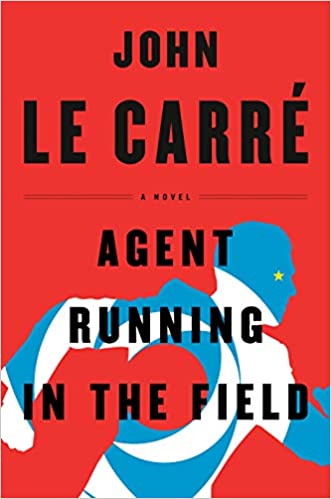
John Le Carré last book, Agent Running in the Field, is told with all the mastery and aplomb that you expect from Le Carré. This novel is a fascinating inside look into what it means to be a spy in the time of Brexit and Trump. As always, Le Carré creates characters that are interesting and complex and his plot lines are satisfyingly twisty and exciting.

It is strange to see how our current reality looks when you read about it in a novel;  the chaos, the loss of American influence, the pettiness of Trump and how that trickles down through diplomatic channels with our closest allies. But Le Carré weaves these political realities into his storyline seamlessly, and that reality gives added credence to the entire plot line. He is able to hit that sweet spot between being exciting but not sacrificing character development for thrills.  Le Carré is truly a master storyteller and he will be sorely missed!

Some honorable mentions for this year are as follows: Testaments by Margaret Atwood; Inland by Tea Obrecht, Station Eleven by Emily St. John Mandel and The Winter Soldier by Daniel Mason. 

I hope you will find as much joy and insight from these books as I did!

Enjoy!

Posted in Books to Read During a Pandemic, End of Year Summary | Leave a comment

Merry Christmas! (Books to Read During a Pandemic, Part 40)

What a strange year and what a strange Christmas! I hope that you have celebrated safely and have been able to find some sense of joy despite the social distancing, illness and fear that has dominated our lives this year.

As I was thinking about what makes Christmas special, I remembered that classic Christmas book, The Best Christmas Pageant Ever. This funny yet profound book always reminds me to look deeper for what is at the heart of Christmas and lets me know that even when the obstacles seem insurmountable, somehow the spirit of Christmas shines through. That seems like a message I need to hear again and again, especially this year! So although I have reviewed it before, I think this year Robinson’s book deserves another read! I hope you will join me!

41YJvELHxlL._SL500_AA300_

From 2012: For my first Christmas posting it seems appropriate to talk about the wonderful book by Barbara Robinson called The Best Christmas Pageant Ever.  For years now, our family has read this out loud as part of our Christmas celebration, either reading portions of it in the week leading up to Christmas or all in one sitting on Christmas Day.  Robinson’s portrayal of the culture clash that occurs when the Herdman children (known for burning down sheds and terrorizing the kids at school) decide that they want to be a part of the Christmas pageant because they heard that there were free desserts, is both funny and poignant.  The book is narrated by a very smart, observant girl whose mother has to step in and take over the Christmas pageant after Mrs. Armstrong, “who was so good at giving orders that she was naturally in charge of everything,” fell and broke her leg.  The Herdman’s add their own brand of chaos to an already chaotic pageant asking impertinent questions and comments like, “You mean they tied [Jesus] up and put him in a feed box? Where was the Child Welfare?” As the story unfolds we see the Herdman children begin to listen to the story of what happened so long ago and begin to understand the deeper meaning of Christmas and the other children in the church who have heard the story so many times begin to hear and understand the story differently too.

I have to confess that I cannot read this book without getting choked up at the end. Somehow this book captures the best of what Christmas means, and I am touched every time as I hear the Christmas story come alive for the Herdman children.  After all, the angel must have said to the shepherds; “Shazam!  Unto You a Child is born!”

Brenda’s Rating: *****( Five Stars out of Five)

Recommend this book to: Sharon, Keith, Ken, Marian and Lauren

Book Study Worthy: No

Read in paper.

Posted in Books to Read During a Pandemic, Christmas books | Leave a comment

The Book Woman of Troublesome Creek by Kim Michele Richardson ( Books to Read During a Pandemic, Part 39)

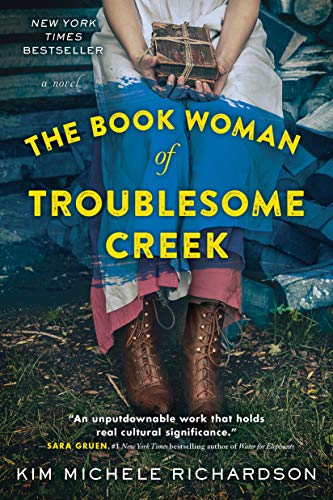
Troublesome Creek, Kentucky in the 1930’s is a hardscrabble place to live, filled with prejudice and superstition. Many of the men work in mines that are not safe and the women stay at home in the backwoods and hollers trying to eke a living from their small gardens and raising their children. There is little opportunity and there is much poverty.

Cussy Mary Carter and her father live in one of the hollers close to Troublesome Creek. Her father works in the mine, but is also a part of the union movement which is trying to get better working conditions for the miners. Cussy, named for the area in France where her ancestors came from, has been working as a Book Woman for the WPA. Every week she travels through the area, visiting homesteads and schools on her donkey, carrying books and distributing reading material to anyone who expresses an interest. For Cussy, the job is not only a way to earn some money and make a difference, but it also helps take away the sting of being a Blue.

Cussy is the last of her kind. Both her parents were Blue, a congenital condition where their skin takes on a faintly bluish tinge and the nails on their hands and feet are blue. When Cussy gets embarrassed or flustered the blood rushes to her face making it as blue as a blueberry. Needless to say Blues are considered strange and suspicious, and are often blamed for any trouble that comes to these rural mountains. In fact many Blues have been killed by folks trying to blame someone else for their own bad luck.

But being a Book Woman allows Cussy to have role beyond what her skin color might allow and gives her a purpose as she travels from homestead to homestead, talking with people and helping them as best she can. Her father, however, has different plans and insists that she get married and give up her job as a Book Woman. Even as she fights to keep her independence and her job, more troubles come to Troublesome Creek and Cussy, must find the inner strength and courage to claim her place and a life of her own.

Richardson has clearly done a lot of research into this time frame, the WPA and the congenital condition known as Methemoglobinemia which was first found in eastern Kentucky. The pictures of the Book Women of the WPA at the end of the book were particularly interesting and gave me a different perspective on what I had read. Richardson is able to describe the hardscrabble people of Troublesome Creek without any condescension, but with empathy and dignity. Cussy, herself, is an amazing character, resilient, and tender, strong and yet rightfully scared of the prejudice that threatens her very existence. This was a fascinating book about a part of history I did not know and I think you will enjoy it too!

Brenda’s Rating: ****(4 Out Of 5 Stars)

Recommend this book to? Marian, Lauren, Keith and Sharon.

Book Study Worthy? Yes

Read in ebook format!

Posted in Books to Read During a Pandemic, Fiction, Historical Fiction, Literary Fiction, Romance | Tagged , , , | Leave a comment